Back to culture
inscriptions
Reading Alhambra’s Inscriptions: A Visitor’s Guide to Poetry and Power
Decode the Alhambra’s epigraphy—Nasrid motto, poems by court literati, and verses that map space and authority.
12/5/2025
18 min read
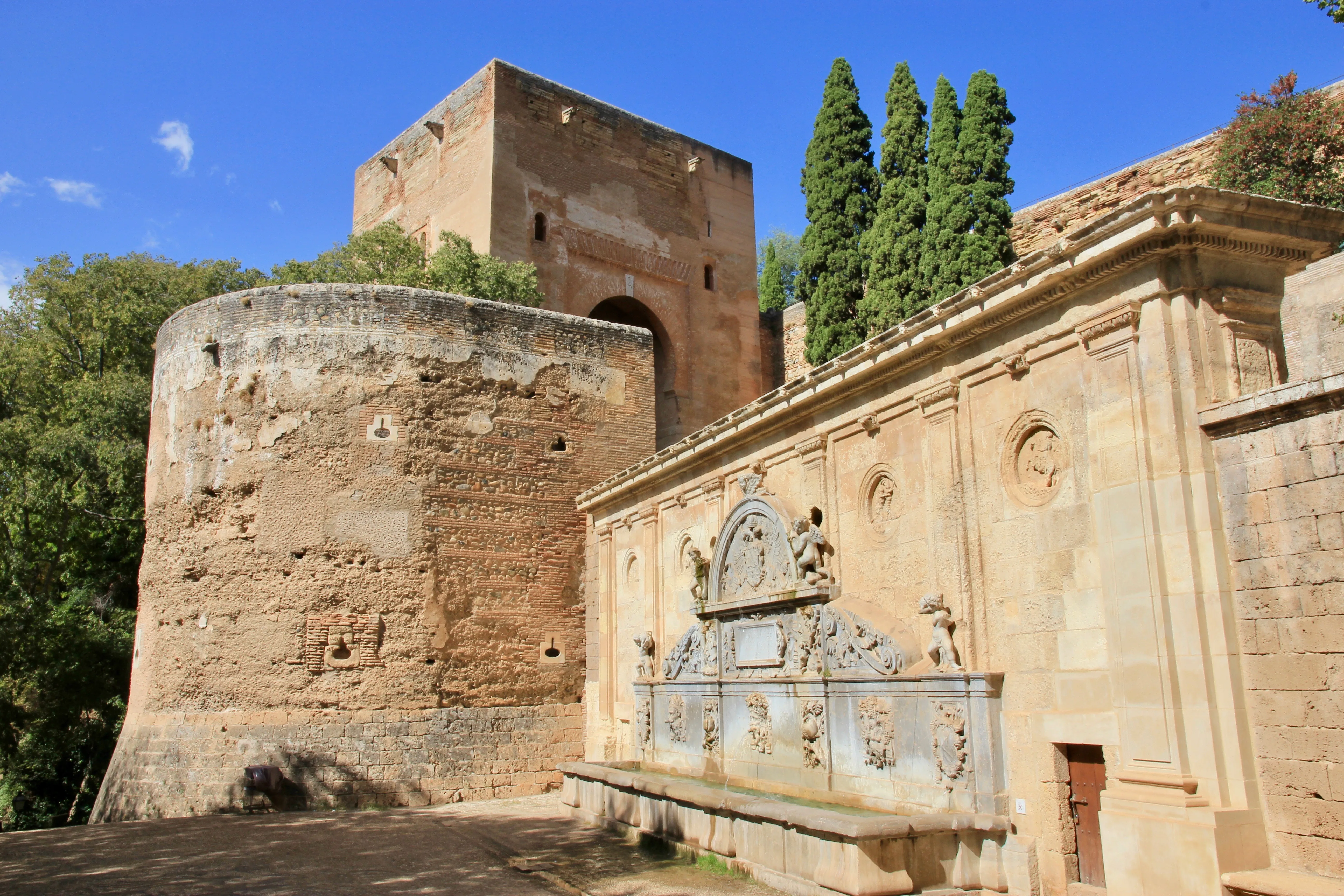
“No victor but God”—the Nasrid motto stitches palaces into one political poem.
What You’re Seeing
- Dynastic mottos (esp. the Nasrid cry), panegyric court poetry, Qur’anic excerpts, benedictions, and occasional craftsmen marks.
- Scripts: animated cursive (naskh) and geometric kufic; both entwine with vegetal scrolls and star‑grid geometry.
- Function: praise the ruler, sanctify space, direct movement, and dissolve mass into meaning.
How to Read In Situ
- Stand back: read bands as “lines” from left to right where possible.
- Find refrains: repeated mottoes act like choruses across rooms.
- Note thresholds: texts thicken at doorheads and cornices—rites of passage.
- Follow water: near pools and rills, poems often address sound and reflection.
Common Phrases (Field Guide)
- Nasrid motto: “Wa lā ghāliba illā Allāh” → “No victor but God.”
- Blessings: “al‑‘izz wa al‑iqbāl” → “glory and good fortune.”
- Qur’anic fragments: light, gardens, and sovereignty are frequent themes.
Case Studies
Court of the Myrtles (Comares)
- Long bands praise the sultan’s justice mirrored in still water; symmetry becomes ethics.
Court of the Lions
- Verses liken water to tamed stars; the fountain “speaks,” becoming a courtier.
Photography Tips
- Rake light (early/late) reveals carving shadows; avoid flash.
- Use a fast prime; expose for highlights to keep legibility in white stucco.
Glossary (Micro)
- Naskh: flowing cursive for extended texts.
- Kufic: angular, monumental; often for mottoes and frames.
Bottom Line
The Alhambra is a library whose shelves are walls—read with your feet.
About the Author

Granada Heritage Editor
I built this to help you enjoy the Alhambra calmly—smarter timing, kinder routes, and context that makes palaces and gardens sing.
Tags
epigraphy
poetry
inscriptions
Nasrid motto
calligraphy
Comments (0)
Leave a Comment
Loading comments...